Abdominal wall hernias are an increasingly recognized global disease burden. Hernias can occur at various places and are named accordingly.
Inguinal hernias are the commonest type of Hernias and most commonly seen in men and this is followed by umbilical hernias which is more common in females. Adding to the burden of the newly diagnosed hernias there is the issue of hernias occurring as a result of past operations for other conditions. These types of hernias that occur due to other surgeries is now recognized as avoidable and much work has been done on how to close the abdomen after surgeries to avoid this issue. An example is hernias occurring after caesarian deliveries which used to be very common and at that time the incision on the abdomen used to be vertical oriented in lower midline.
Today Caesarian sections are usually done by horizontal lower abdomen incisions and hernias after caesarean has drastically reduced. Much work has been done on how to prevent hernias after surgeries on the abdomen and even after laparoscopic surgeries but this still is a significant burden.
Let us look at some Global and National statistics.
Globally there were 23.92 million cases of hernias in 1990 and increased to 32.53 million cases in 2019 i.e a 36% increase from 1990 to 2019. This is probably not only due to increasing population, but probably also reflects more surgeries being done and resultant hernias due to other surgeries.
In 2019 India , China and Brazil accounted for more than 1/3rd of the worldwide incident cases of abdominal wall hernias with India in the lead. It was also found that the incidence of abdominal wall hernias increases with age. An increasing number of older population could also reflect in an increased numer of cases of Hernias seen. The older population is a special category as Hernias detected at this age needs a careful tailored approach to choose the least invasive technique to cure the Hernia. The older people may have other conditions like Diabetes, Heart related issues or even major kidney or lung problem.
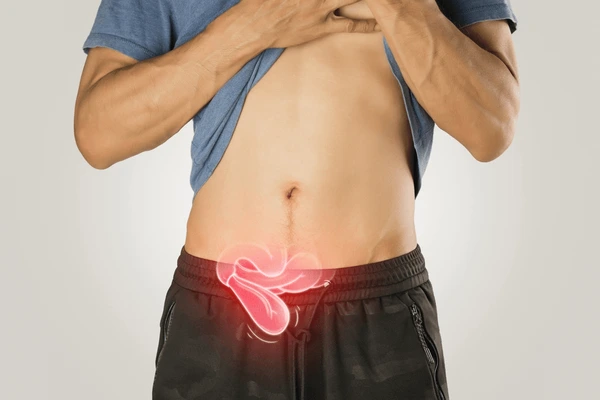
A Hernia detected with all these issues is a challenge to tackle , but today age alone is not a criteria to refuse treatment .
In fact it was noted that the prevalence of Hernias in people 70 years and older increased significantly for 1990 to 2019 reflecting an unmet target to treat these high risk individuals.
Hernias are a major health issue in India compounded by the fact that in spite of global advances in treatment and many International and even National societies devoted to disseminate the newer advances and guidelines to surgeons the wide variation in the socio demographic scene means that a large number of people who have Hernias in India cannot access optimum treatment.
Giving a suboptimal treatment for Hernias further decreases the quality of life of the patient due to recurrences and other complications.
In 2021 the incident rate for Hernias is reported as 137.05 cases per 100,000 population. However if you consider prevalence rate , the numbers are much more . It is important at this stage to understand difference between prevalence and incidence.

. Prevalence reflects the number of people in the population that could be having Hernia. Incidence on the other hand reflects the number of new cases of hernia i.e the number of hernia cases being treated at any point of time.
Hence with a population of more than 1.4 billion and the incident rate for hernias being 137.05 for 100,000 population, the number of hernia cases being treated at any point of time in our country is about 2 million : a huge number.
Projection for 2031 indicates stabilization of incident rates, and increase in prevalence.
Hence to deliver optimal and cost effective treatment for Hernias it is essential to teach all General surgeons to approach a patient with Hernia with all preparedness and skills ensuring the best technique which is tailored to that specific patient and is cost effective.
Hence to deliver optimal and cost effective treatment for Hernias it is essential to teach all General surgeons to approach a patient with Hernia with all preparedness and skills ensuring the best technique which is tailored to that specific patient and is cost effective.


